
Terracotta Warriors Pit 1 and the limits of the figure count
Terracotta Warriors Pit 1 contains the long excavated formations associated with the burial complex of Qin Shihuang, the first emperor. The museum's description dated 21 April 2023 gives an area of 14,260 square metres and an estimate of about 6,000 pottery figures and horses. That estimate describes archaeological contents, rather than a count of complete warriors visible during a visit.
Use the number to understand the scale of the pit, then look at the relationship between the rows and the excavated spaces. A count of heads in a photograph measures something different from an archaeological estimate. Pottery horses also belong to the stated total, so describing the figure as 6,000 displayed soldiers changes its meaning.
The Terracotta Army is in Lintong, within Xi’an in Shaanxi. Its connection with the emperor's wider burial complex matters when planning the day: the warrior pits and the mausoleum park are separate museum areas. Read the Lishanyuan and mausoleum guide before deciding whether to include both.
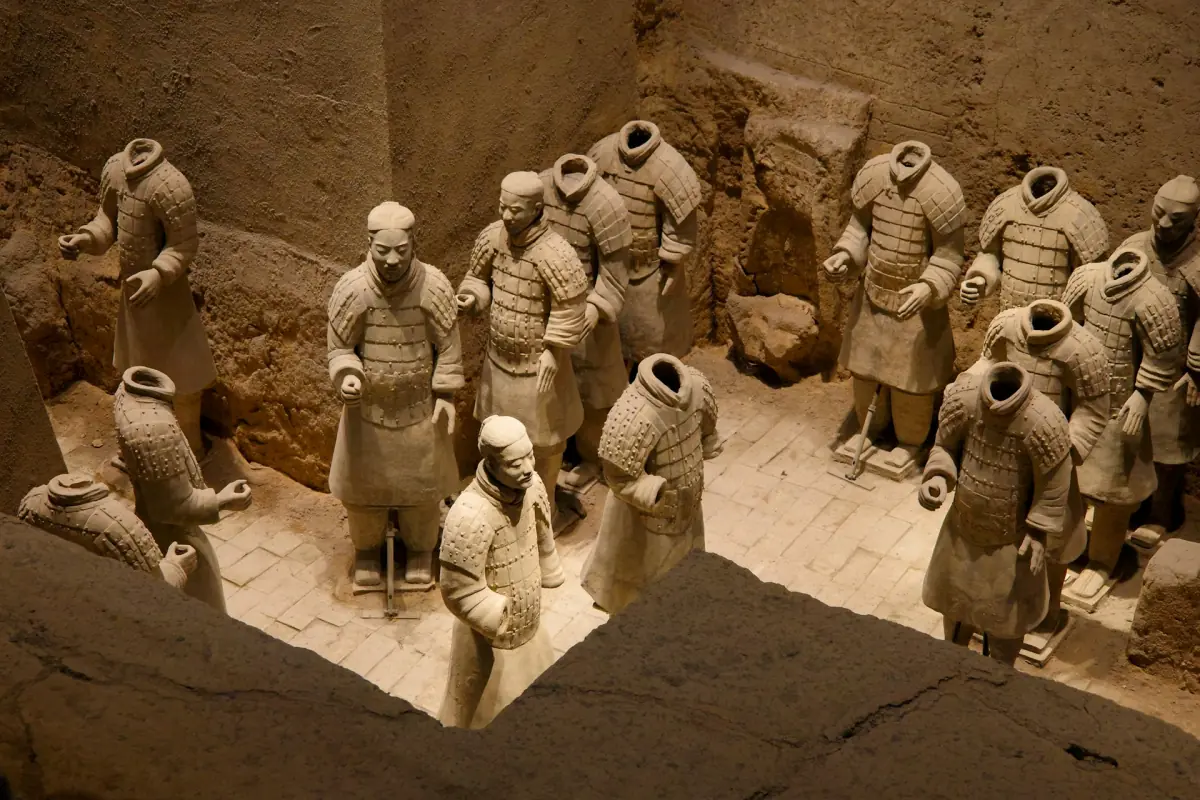
Pit 2 after the redesign
Pit 2 reopened on a trial basis on 1 October 2026, according to the museum announcement dated 2 October 2026. The redesign introduced revised paths, signs and digital explanations. The announcement describes a northern area for a more detailed visit and a southern area for a shorter look. Choose the route that fits the time available rather than treating every hall as an identical stop.
Pit 2 has an L-shaped plan and covers about 6,000 square metres. Discovered in April 1976, it has an estimated archaeological population of more than 1,300 pottery figures and horses, derived from trial excavations. This is another estimate of contents, rather than a promise that all those objects will be on view. Follow the museum's arrangements on the day of your visit.
A guided visit to the pits
This guided museum visit includes access to the exhibition areas of pits 1, 2 and 3.
Hand-picked tours, booked through Viator. Prices are indicative starting prices in US dollars (as of November 2026). Tap a tour for live availability and the current price in your currency.
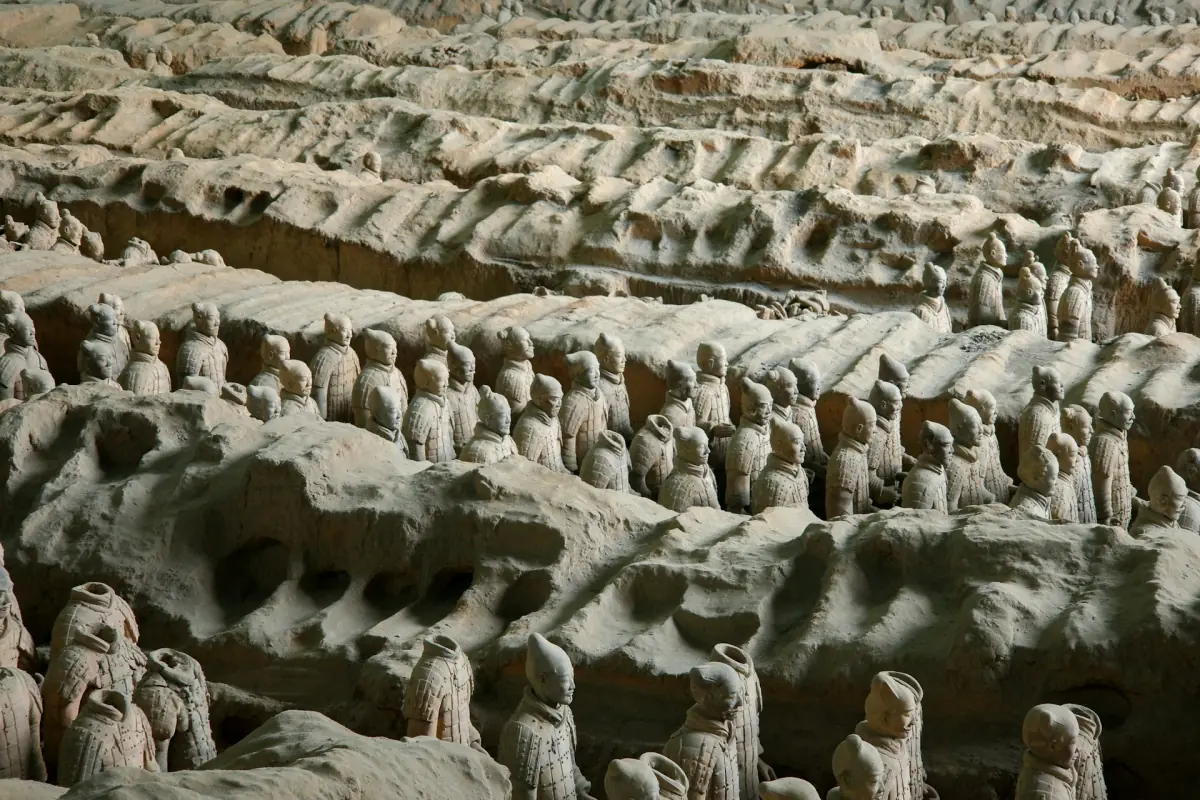
A guided visit through the warrior pits
The museum visit includes an English-speaking guide, museum admission and access to the exhibition area for Pits 1, 2 and 3.
Pit 3 as an interpreted command post
Pit 3 is interpreted by researchers as a command post for the other pits. The distinction between an interpretation and a proven original function is useful: the surviving arrangement offers evidence, while the explanation gives that evidence a possible meaning. Discovered in May 1976, this pit covers about 520 square metres.
Give Pit 3 attention for its relationship with the larger excavations rather than judging it only by size. A guide can help connect the spaces and historical context. The assigned guided museum visit includes an English-speaking guide, admission and access to the exhibition area for all three pits. For other ways to organise the day, see the museum tours guide.
| Pit | What distinguishes it | How to read the evidence |
|---|---|---|
| Pit 1 | Long rows within a large excavation | The historical estimate includes figures and horses |
| Pit 2 | L-shaped plan and redesigned visitor routes | Trial excavation estimates differ from visible displays |
| Pit 3 | Smaller excavated area | Command-post function is a researchers' interpretation |
Pottery art and the architecture of the complex
The Terracotta Army combines individual pottery figures with the spatial organisation of a burial complex. Look at the figures as objects, then step back to consider the rows and divisions within the excavation. This gives the visit a focus beyond collecting photographs of the largest hall. Keep to the visitor routes and treat the excavated areas as protected heritage.
The history of the Terracotta Army explains how the Qin burial project, modern discoveries and UNESCO inscription fit together. For a further museum-focused account, see the Terracotta Army museum guide. The practical choice here is how to divide your attention between the pits and the separate mausoleum area.
A museum route without a compulsory pit order
The warrior pits can be planned around the museum's visitor arrangements and your reserved entry window. Avoid turning the pit numbers into a compulsory sequence. Allow time to compare the halls, read the interpretation and move between stops. If the bronze chariots are a priority, reserve part of the day for Lishanyuan rather than looking for them beside Pit 1.
The museum's undated homepage suggests about 1.5 hours for each museum area, with connecting travel and additional walking on top. Keep admission arrangements separate from sightseeing time: the ticket and passport guide explains real-name reservations and entry planning.
Questions about the Terracotta Army pits
How many figures are in Pit 1?
About 6,000 pottery figures and horses are estimated for Pit 1 in the museum description dated 21 April 2023. The figure concerns archaeological contents, rather than the number of complete soldiers displayed today. Use it as a measure of scale and allow time to explore the other pits as well.
Did Pit 2 reopen after the redesign?
Yes, Pit 2 reopened on a trial basis on 1 October 2026, as announced by the museum on 2 October 2026. The redesigned exhibition includes different routes for detailed and shorter visits. Follow the visitor arrangements for your date and leave some flexibility in the order of the halls.
What does the guided pit visit include?
The guided Terracotta Army visit includes a professional English-speaking guide, admission to the museum and access to the exhibition area for Pits 1, 2 and 3. Choose this visit for interpretation across the pits. Keep your journey to the museum and your reserved admission arrangements in the day's plan.