
Choosing the best time to visit Terracotta Warriors
The best time to visit Terracotta Warriors for milder conditions falls in April, May or October, based on our interpretation of Xi’an’s monthly average temperatures. That is an editorial reading of the climate figures, rather than a promise about the weather on your date. Plan around your comfort outdoors as well as the time you want to spend looking at the warrior pits.
The visit includes more than standing inside a hall. The warrior pits and Lishanyuan are separate museum areas, with walks and connecting travel to fit into the day. Your reserved entry window anchors that plan. Choose a season that suits you, then arrange the journey and the amount of museum time before adding further city sights.
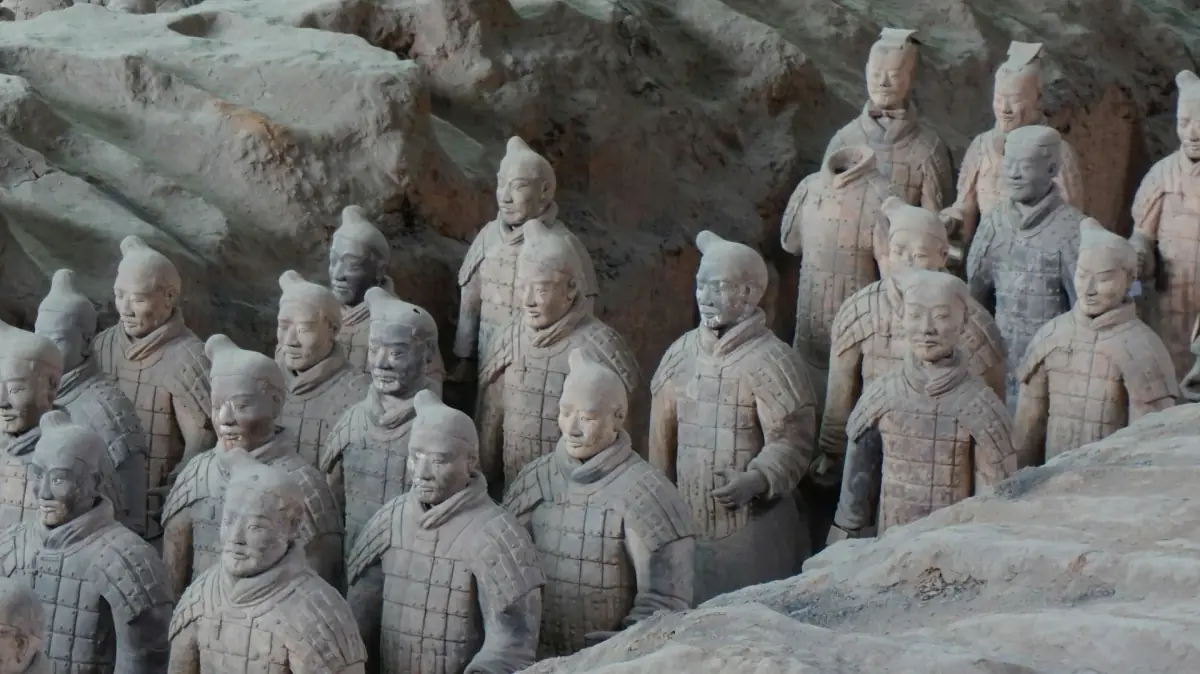
Xi’an climate by month
Xi’an’s city weather station provides monthly mean temperature and precipitation normals for 1991 to 2020. The JMA climate table, read on 13 November 2026, gives a historical baseline for comparing months. These figures describe a city station rather than the museum buildings, and a monthly mean temperature is different from a typical daytime high.
| Month | Mean temperature °C | Precipitation mm |
|---|---|---|
| January | 0.5 | 6.5 |
| February | 4.0 | 6.0 |
| March | 9.4 | 26.9 |
| April | 15.9 | 36.7 |
| May | 20.9 | 50.2 |
| June | 25.8 | 65.0 |
| July | 27.7 | 91.3 |
| August | 25.4 | 79.6 |
| September | 20.7 | 81.1 |
| October | 14.2 | 63.4 |
| November | 7.4 | 24.1 |
| December | 1.7 | 8.2 |
Use the temperature and rain columns together. A month that is cooler than midsummer can still bring substantial rainfall, while a dry winter month can be cold. Once travel dates are fixed, use a forecast close to departure to choose clothing for your actual museum day rather than packing solely from the long-term table.
Plan a museum and city day
This combination brings the museum, city wall and pagoda together on one planned visit.
Hand-picked tours, booked through GetYourGuide. Prices are indicative starting prices in US dollars (as of November 2026). Tap a tour for live availability and the current price in your currency.
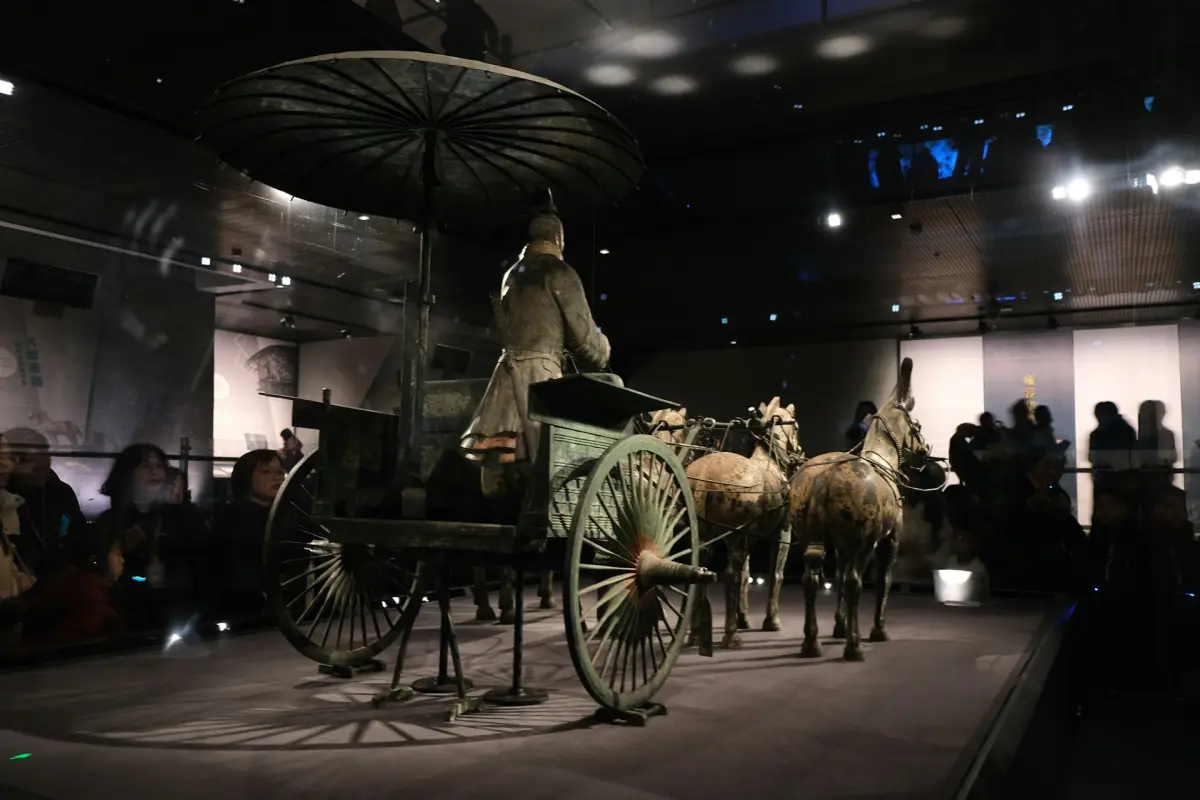
A coordinated museum and city sightseeing day
This guided option combines the warriors, city wall and Big Wild Goose Pagoda; the pagoda climb remains extra and crowd levels vary.
Spring and autumn as milder choices
April, May and October in Xi’an have milder monthly means than the summer peak in the station table. April averages 15.9°C, May 20.9°C and October 14.2°C in the 1991 to 2020 normals. Those values make these months reasonable choices if you prefer to avoid the hotter part of the year while walking between visitor areas.
September also has a milder mean temperature than July, but its rainfall normal is 81.1 mm. Treat autumn as a season to plan for rain as well as cooler conditions. Compare your route with the museum transport guide, particularly if you will make several changes between trains and buses before beginning the visit.
Summer rain and winter cold
Xi’an summers are hot and rainy, while winters are cold with relatively little precipitation. The city station’s July mean is 27.7°C and January mean is 0.5°C for 1991 to 2020. Use those seasonal contrasts to decide whether heat or cold matters more to you, then leave practical room for the conditions on the day.
The museum day still involves outdoor movement even when your main interest is the figures. Pack for the forecast, keep the original passport needed for entry accessible and avoid making a tight onward itinerary depend on ideal weather. A city combination tour is an option when its route suits you; it should be chosen for the included visits rather than as a weather solution.
Seasonal hours, entry windows and crowds
The Terracotta Warriors visit should be planned around the time window on your reservation, with last admission treated separately from closing time. The Chinese museum page read on 13 November 2026 uses seasonal periods of 16 March to 15 November and 16 November to 15 March. Use the ticket guide for entry planning rather than arriving close to closing.
The museum’s undated homepage suggests approximately 1.5 hours for each of its two areas, plus walking and connecting travel. Decide whether you want the warrior pits alone or also the mausoleum park and bronze chariots. Keep time available for moving through the site instead of treating the published closing time as the last moment to begin.
The guided city combination includes the Terracotta Warriors, Big Wild Goose Pagoda and city wall, attraction tickets, dedicated vehicle transport and an English-speaking guide. Entry to the top of the pagoda is extra. The product name uses “Off-Peak”, but choose the itinerary for its content and allow for other visitors in the museum. No particular hour should be the foundation of a crowd-free plan.
Terracotta Warriors timing questions
Terracotta Warriors timing depends on the season, your reserved admission and the visitor areas you want to include.
Which months suit a milder visit?
April, May and October are reasonable milder choices for the Terracotta Warriors based on Xi’an’s 1991 to 2020 monthly mean temperatures. This is a planning interpretation of the climate normals. Rain remains possible, so compare the historical figures with a forecast near departure and allow for outdoor movement between museum areas.
Is September a dry month in Xi’an?
No, September should not be treated as a reliably dry choice for Xi’an. The city station’s precipitation normal is 81.1 mm for 1991 to 2020. Its milder temperature may still suit your plans, but prepare for rain on the journey and between museum areas rather than relying on an autumn label.
Does an off-peak tour guarantee quiet halls?
No, the Terracotta Warriors combination tour’s name does not guarantee empty halls or a particular waiting time. Its concrete inclusions are the museum, city wall and Big Wild Goose Pagoda visits, attraction tickets, vehicle transport and an English-speaking guide. The climb to the top of the pagoda is extra.