
The Emperor Qin Shi Huang Mausoleum and Lishanyuan
The Emperor Qin Shi Huang Mausoleum area at Lishanyuan is the museum's separate mausoleum archaeology park, complementing the Terracotta Army pits. The burial complex lies at the northern foot of Lishan in Lintong, Xi’an. For planning purposes, think of a visit with distinct areas rather than a succession of rooms inside a single building.
The warrior halls introduce the pottery army, while Lishanyuan includes the bronze chariot museum and other parts of the burial complex. Decide which objects matter to your visit before allocating time. If the bronze horses and chariots are a priority, put Lishanyuan into the itinerary explicitly and read the warrior pits guide to balance the two areas.
The museum's undated homepage suggests about 1.5 hours for each area. Treat that as sightseeing guidance, with additional walking and the connecting journey allowed separately. A reserved admission window, the journey from Xi’an and the return trip all need their own space in the day. Avoid scheduling an onward commitment immediately after the suggested viewing time.
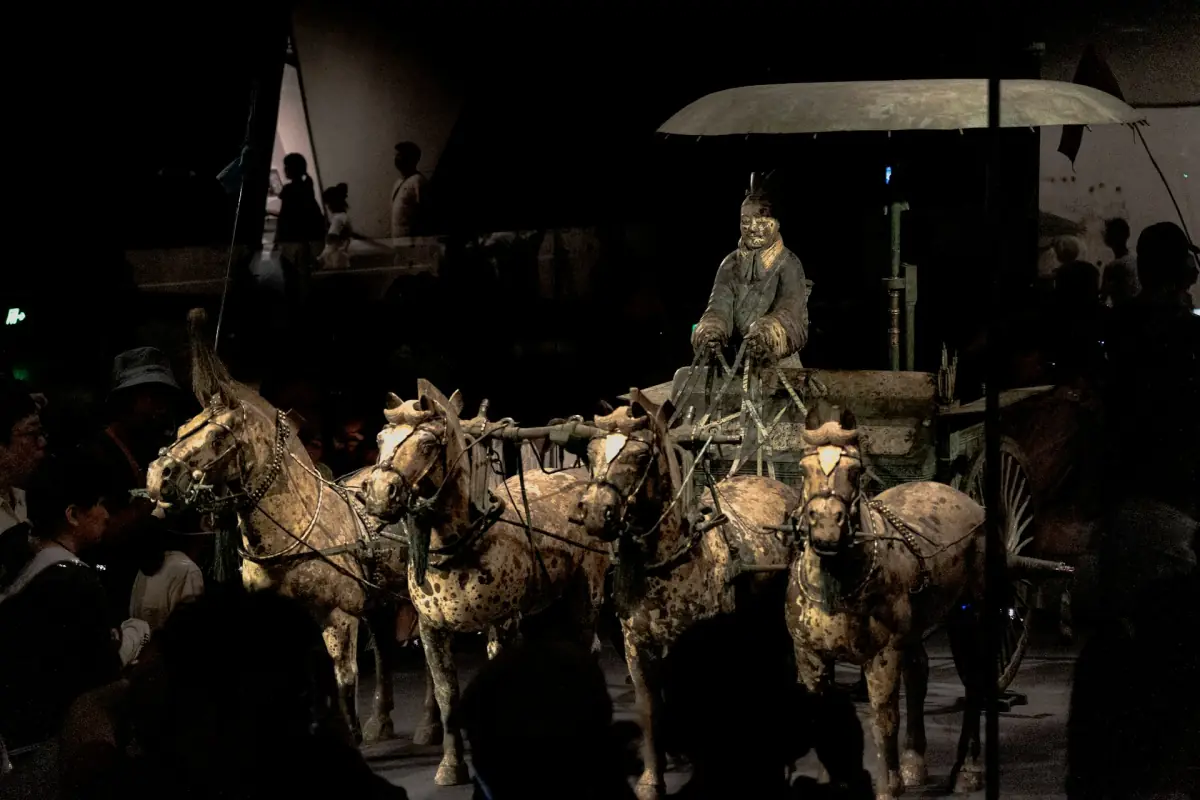
The bronze chariots and their historical move
The bronze chariot museum belongs to Lishanyuan, following a historical relocation described in the museum announcement of 18 May 2021. That announcement recorded the move of the second bronze chariot and the trial opening of the new museum on the same date. The old chariot hall at the warrior pits ceased operating from 19 May 2021.
The relocation explains why an older itinerary may place the chariots beside the pottery army. Use the separate mausoleum park as your destination for this part of the visit. The historical announcement explains a change of location; the day's visitor arrangements determine how you move through the exhibitions.
The bronze groups were recovered west of the burial mound in December 1980. The museum describes two painted bronze chariot-and-horse groups, approximately half full size, each with four horses. These objects offer a different material and scale from the pottery formations. Allow time to look at the group as a whole before concentrating on the relationship between the horses and carriage.
Museum and Lishan Yuan admission
This ticket includes both the Terracotta Army Museum and Lishan Yuan.
Hand-picked tours, booked through Viator. Prices are indicative starting prices in US dollars (as of November 2026). Tap a tour for live availability and the current price in your currency.
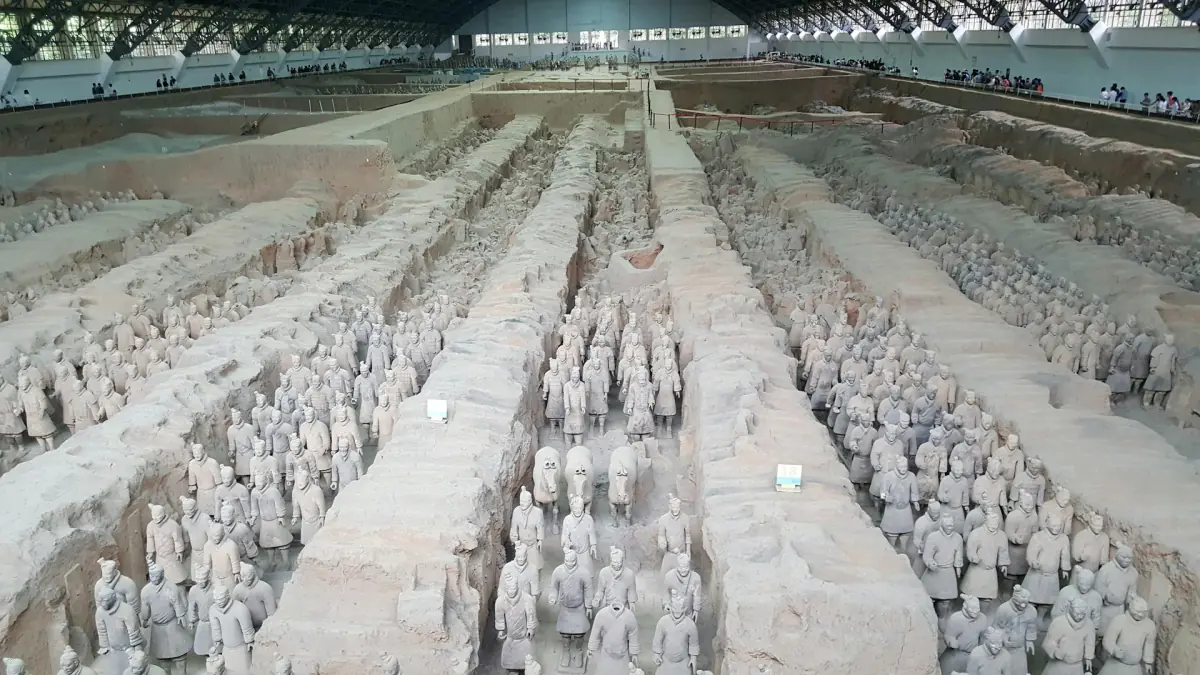
Admission for the warrior museum and Lishan Yuan
This ticket includes admission to the Terracotta Army Museum and Lishan Yuan; guiding services belong to the option selected, and entry requires the original passport.
The imperial mausoleum, K0006 and K9901
Lishanyuan's museum structure includes the imperial mausoleum, K0006 and K9901 alongside the bronze chariot museum. These names describe components of the broader archaeology park. Plan around the park's visitor areas and exhibitions, keeping an underground tomb-chamber experience outside the itinerary.
Qin Shihuang's burial complex began in 246 BC, and the emperor died in 210 BC. The Terracotta Army forms part of this wider funerary setting. Knowing that relationship makes the separate museum areas easier to understand: the warrior pits are a major discovery within a larger archaeological landscape. The history guide sets out the ancient dates and later discoveries.
Lishanyuan is the specific mausoleum park named in this visit. Keep that destination distinct from Huaqing and other places using the Lishan name. When comparing admission options, use the named destinations and included services to decide what fits your plan, rather than treating a general geographic label as access to every nearby attraction.
| Museum area | Main focus | Planning implication |
|---|---|---|
| Warrior pits | Pottery army and excavated formations | Allow time for the different pits |
| Lishanyuan | Mausoleum park and bronze chariot museum | Include the connection between museum areas |
| Both areas | Army and broader burial context | Separate sightseeing time from walking and travel |
Visiting both museum areas in one day
The warrior pits and Lishanyuan are connected by a free museum bus, described on the museum's undated homepage. Build the connection into your route and consult the arrangements on arrival before fixing the last part of the day. Choose a viewing priority in each area so that a longer stop in one hall does not consume the time intended for the other area.
The museum announcement dated 18 May 2021 described a single-ticket system for the pits and Lishanyuan, including the connecting bus. This is a dated explanation of the museum's organisation. The admission product presented here explicitly includes the Terracotta Army Museum and Lishan Yuan, with a guide provided when the guiding option is selected.
The admission product requires your passport for entry. Prepare the original passport and the matching booking details, then organise the journey separately using the transport guide. The ticket guide covers real-name reservations and entry planning in more detail. Keep these administrative steps separate from deciding how long to spend looking at the archaeology.
Questions about Lishanyuan and the mausoleum
Where are the bronze chariots displayed?
The bronze chariots are displayed in the museum area at Lishanyuan, the mausoleum archaeology park. The museum's announcement of 18 May 2021 recorded the historical relocation to the new museum. Include the separate park in your itinerary if the chariots are a priority alongside the pottery warrior pits.
How much time should I allow for each museum area?
About 1.5 hours per area is the guidance on the museum's undated homepage. Walking and the connection between the warrior pits and Lishanyuan add time. Use that figure as a starting point for planning, then leave room for the objects you want to examine and your onward journey.
Does the admission option include a guide?
Yes, the Terracotta Army Museum and Lishan Yuan admission product provides a guide when you select an option that includes guiding services. Its admission scope names both museum areas. Bring the original passport required for entry and organise your journey around the booked visit and the connection between areas.