
Terracotta Warriors history begins with the Qin burial project
Terracotta Warriors history begins with the burial complex of Qin Shihuang, whose construction started in 246 BC. Qin became the first emperor following unification in 221 BC and died in 210 BC. The pottery army belongs to that funerary setting, which extends beyond the excavated warrior halls visited today.
The complex lies at the northern foot of Lishan in Lintong, within Xi’an in Shaanxi. Start with that relationship between army and burial landscape when preparing your visit. A view of the warrior rows shows a major part of the site, while the wider setting explains why the museum also has a separate mausoleum archaeology park.
For visitors looking for Terracotta Warriors facts, the chronology provides a useful framework: distinguish the ancient construction, the modern discoveries and the later recognition of the site's heritage. These are different stages in its story. The guide to the warrior pits deals with figure estimates and what those estimates mean for the objects you see.
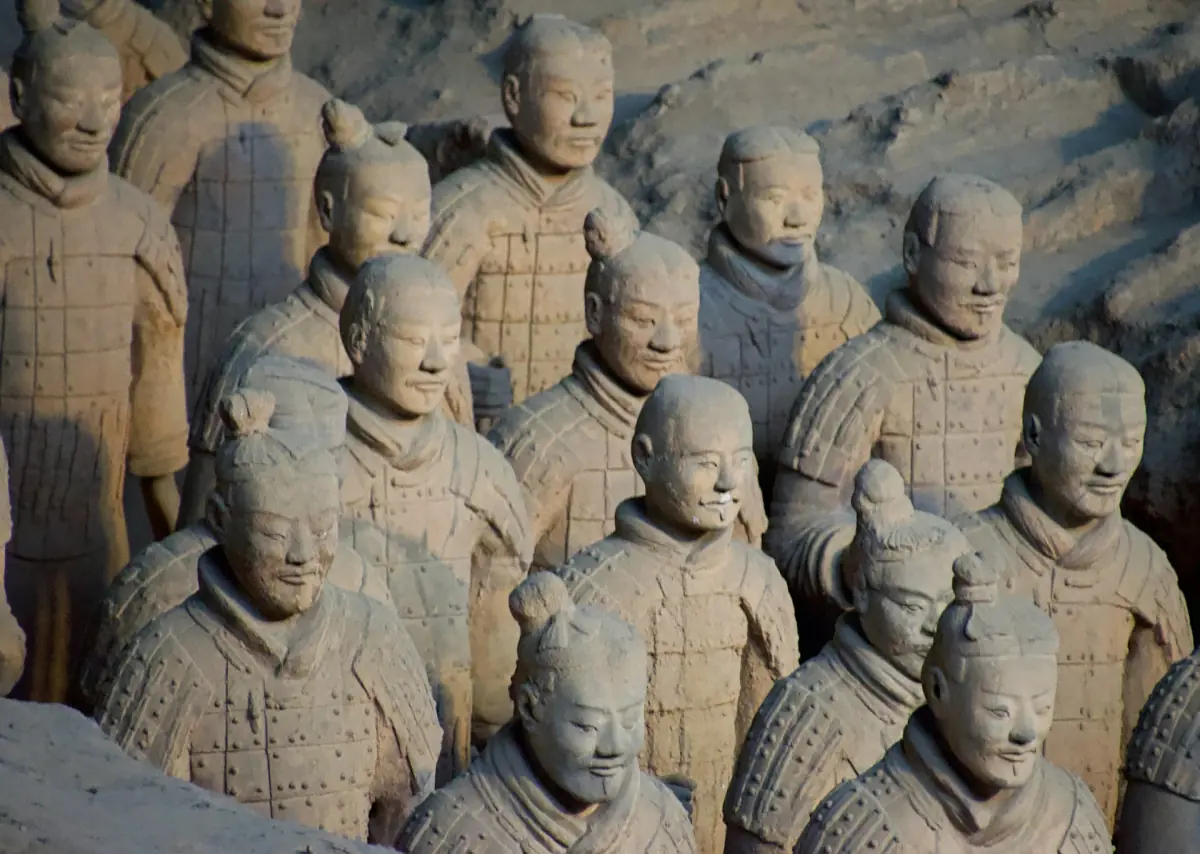
The 1974 discovery and further pits in 1976
The Terracotta Army was discovered in 1974, with the museum's historical account placing the find in March during well digging by residents of Xiyang. That event belongs to the modern discovery story, rather than the ancient construction timeline. Keeping the two apart makes the museum's excavated spaces easier to read as archaeological evidence.
Pit 2 was discovered in April 1976 and Pit 3 in May 1976. The later discoveries broadened the picture beyond the long formations in Pit 1. Compare the pits as related spaces with different plans and scales, rather than expecting each to repeat the same display. A smaller excavation can raise a different question about the organisation of the complex.
Pit 3 is interpreted by researchers as a command post for the other pits. That explanation is a reading of the evidence, rather than an established original function. During a guided visit, it is a useful example of how archaeology moves from an excavated arrangement to a possible account of its purpose.
A guided museum visit
A private guided museum visit offers a way to explore the warriors in person.
Hand-picked tours, booked through GetYourGuide. Prices are indicative starting prices in US dollars (as of November 2026). Tap a tour for live availability and the current price in your currency.
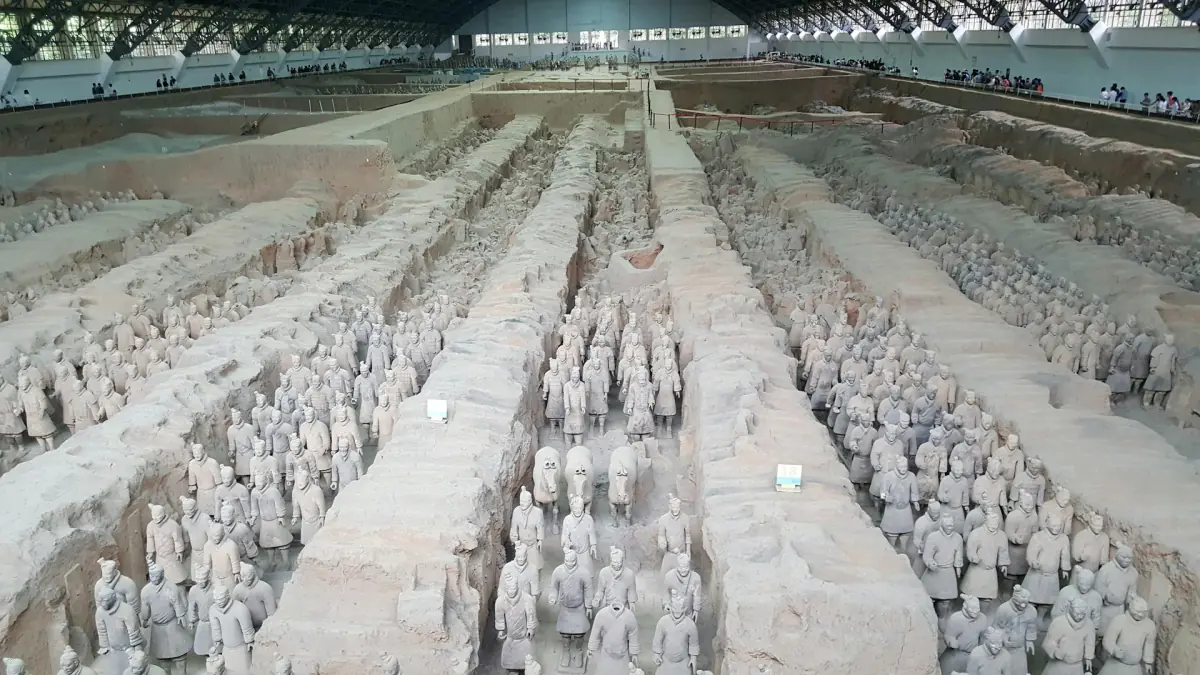
Explore the history with a private museum guide
An English-speaking guide and museum admission connect the warrior pits with their historical setting. Lunch belongs to the selected lunch option.
The bronze chariot discovery in December 1980
The bronze chariot groups were recovered west of the burial mound in December 1980. The museum describes two painted bronze chariot-and-horse groups, approximately half full size and each drawn by four horses. The discovery adds a different material and scale to the story represented by the pottery army.
The bronze chariots are now associated with the separate museum area at Lishanyuan. Their historical relocation was described in the museum announcement of 18 May 2021. For the visitor, this creates a practical decision: make room for the mausoleum park if you want the bronze groups to form part of your day. The mausoleum guide explains that division.
| Date | Event | Meaning for a museum visit |
|---|---|---|
| 246 BC | Burial complex construction began | Places the army within a larger funerary project |
| 1974 | Terracotta Army discovery | Separates ancient history from modern excavation |
| 1976 | Discoveries of Pits 2 and 3 | Encourages comparison between different spaces |
| December 1980 | Bronze chariot groups recovered | Adds another part of the burial complex's material culture |
| 1987 | UNESCO inscription | Recognises the wider mausoleum heritage |
UNESCO recognition and protection of the complex
The mausoleum became UNESCO World Heritage in 1987 under the title “Mausoleum of the First Qin Emperor”. The heritage encompasses more than the warrior halls. Its protection concerns a wider archaeological setting, so a World Heritage boundary is a different concept from a visitor route through the museum.
UNESCO's description gives 56.25 square kilometres for the broader archaeological context. Its listing metadata identifies a property of 244 hectares and a buffer zone of 4,325 hectares. These are different boundaries serving different descriptions and protective purposes. Use them to understand the scale of the heritage, rather than turning any of them into an area to walk during a museum visit.
The museum continues to interpret the excavations for visitors. One recent change was the trial reopening of Pit 2 on 1 October 2026, announced on 2 October 2026 after its redesign. An ancient site therefore has a modern exhibition history too. Follow the visitor routes and use the signs to understand the presentation you encounter.
A guided visit as an introduction to the history
The private Terracotta Army museum visit presented here includes an English-speaking guide and museum admission, with Chinese-style lunch in the selected lunch option. The product lasts 5 to 6 hours. Confirm whether your selected option starts with hotel collection or at the museum entrance when booking.
The value of historical interpretation is the connection between separate discoveries and the larger burial complex. Read the private visit guide for the option details or compare museum tours for other visit formats. Prepare your reservation and passport separately so that entry arrangements leave your attention free for the museum.
Questions about Terracotta Warriors history
When was the Terracotta Army discovered?
1974 is the discovery year of the Terracotta Army. The museum's historical account places the find in March during well digging by Xiyang residents. Pit 2 followed in April 1976 and Pit 3 in May 1976, expanding the archaeological picture beyond the original discovery and giving visitors different spaces to compare.
When did construction of the burial complex begin?
246 BC is the construction start given for Qin Shihuang's burial complex. Qin became the first emperor in 221 BC and died in 210 BC. The Terracotta Army belongs to that larger funerary project, which helps explain the connection between the warrior pits and the separate mausoleum park at Lishanyuan.
Is the UNESCO site larger than the warrior halls?
Yes, the UNESCO heritage concerns the Mausoleum of the First Qin Emperor and extends beyond the warrior halls. The property, its buffer zone and the broader archaeological landscape describe different boundaries. Plan your visit around the museum areas and routes, while using the wider heritage context to understand their relationship.